


The Cognitive Operating Model (COM) was never about building AI.
It’s about learning how to operate with it.
That distinction matters.
Because most organizations still treat AI like another project — something to implement, pilot, or “get working.” But COM is about the shift that happens after the pilot, when AI becomes part of how decisions are made, processes are managed, and systems evolve.
In the first four parts of this series, we explored how that shift unfolds:
Stop Integrating AI. Start Operating on It. — why AI needs to become part of your operational fabric, not an add-on.
You’re Not Ready to Automate Until You’ve Mapped Your Decisions. — how to understand the decisions that drive your business before handing them off to machines.
From Decisions to Delegation. — how to design roles and responsibilities across human and machine.
From Delegation to Orchestration. — how to coordinate those systems so they work together.
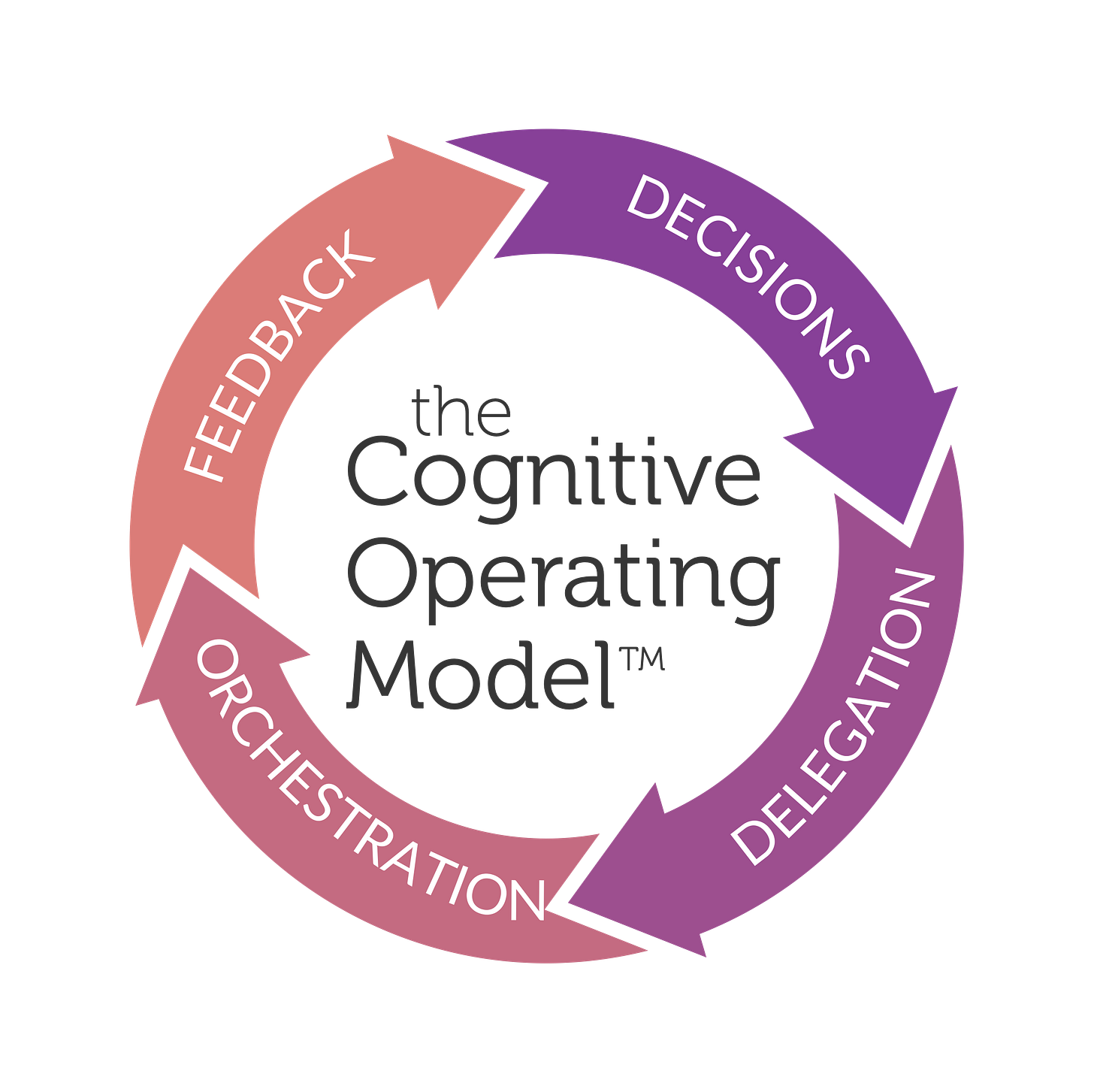
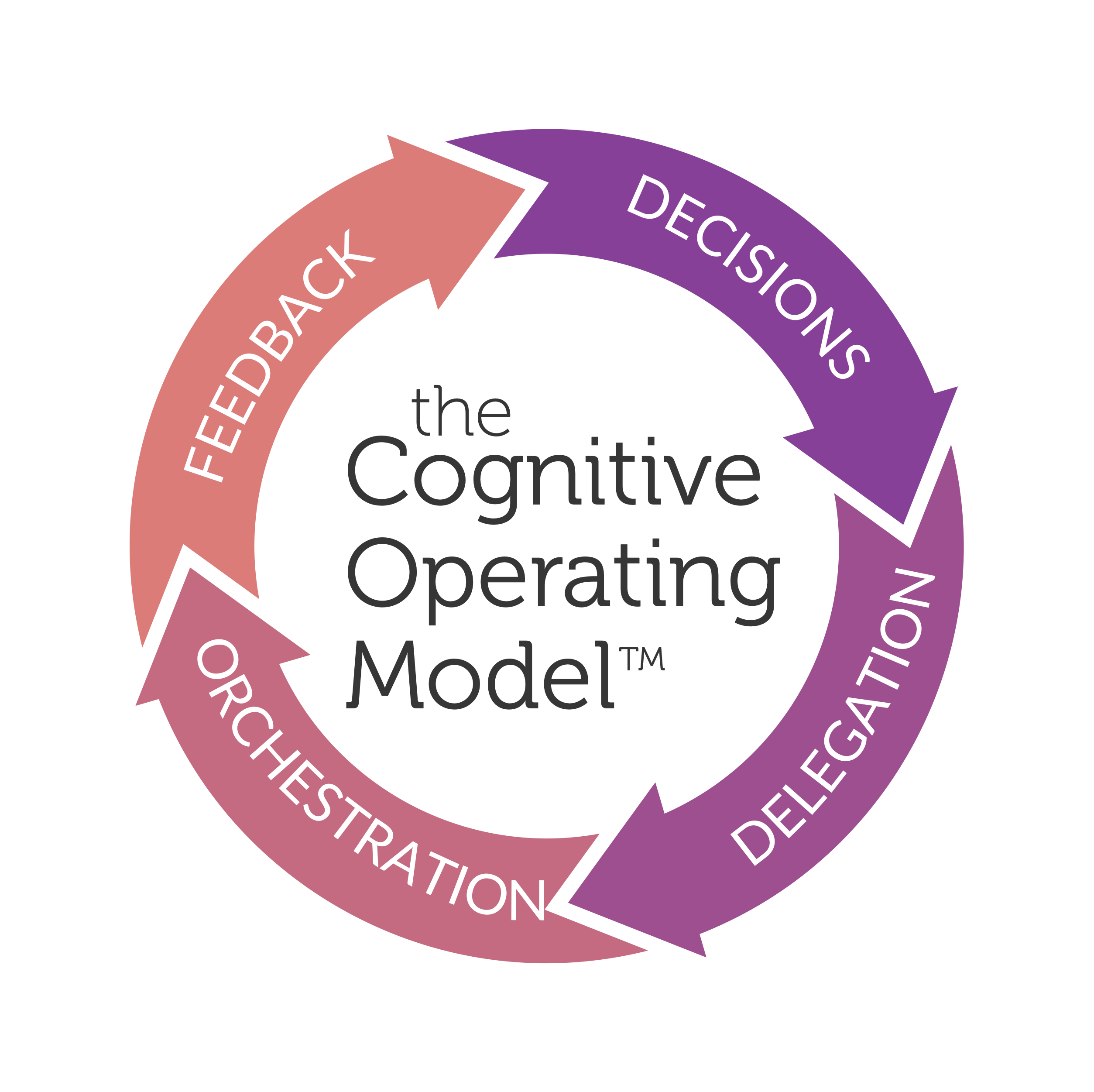
Each of those steps builds structure — a way to align tools, teams, and information.
But structure alone doesn’t create intelligence.
That’s where this final piece comes in.
Because once the systems are orchestrated — once the automations are running, the copilots assisting, and the dashboards glowing green — you still face one essential question:
How does the organization learn and our systems evolve?
That’s what defines the evolution from orchestration, to operation.
The Missing Layer: Learning
Orchestration brings coordination. But coordination without learning is static.
It’s easy to stop at orchestration — automating tasks, connecting data flows, and aligning your AI tools is the end-goal after all! And if you’ve successfully achieved all of that, congratulations! What you’ve built is a machine that performs… but not necessarily a system that will improve
.
Without feedback, AI systems end up amplifying old assumptions. They get faster at executing the wrong things. And over time, this can amplify the wrong information. Plus, given the velocity of change in the AI space, static systems won’t just break… they become relics.
Feedback loops are what convert orchestration into evolution. They create the conditions for systems — and the humans operating them — to learn, adapt, and improve continuously.
Orchestration gives your organization rhythm. Feedback gives it tempo — the ability to accelerate, slow down, and stay in tune with change.
The Three Loops of Learning
In the Cognitive Operating Model, feedback doesn’t happen in a single place. It happens across three interlocking layers — Operational, Organizational, and Strategic.
Together, they form what I call the Cognitive Flywheel — a system of learning that compounds over time.
1. Operational Loop: Machine Learning in Action
This is the most direct form of feedback — where data from outcomes is used to improve the performance of a specific system or model.
A chatbot learns from which answers get marked helpful.
A sales forecast model improves as it compares predictions to actual results.
A content system refines tone and structure based on engagement data.
This loop is largely technical, but it’s also where governance begins. You need mechanisms to review, monitor, and retrain models — ensuring that what’s “learned” aligns with human and organizational values.
2. Organizational Loop: Human + Process Feedback
This is where people enter the equation.
The Organizational Loop captures how teams interact with the systems — where friction appears, what insights emerge, and how processes can adapt.
An AI system might surface that employees spend 40% of their time searching for information. The technology alone can’t solve that; teams need to adjust how they document and share knowledge.
Operational feedback improves the system.
Organizational feedback improves the workflow.
3. Strategic Loop: Feedback as Governance
At the top layer, feedback informs strategic decision-making.
Leaders use insights from AI systems to test assumptions, re-prioritize initiatives, or design new ones entirely.
This is the loop where the organization learns not just what’s working, but what’s worth working on.
It’s also where human oversight matters most. Feedback loops at the strategic level must balance agility with accountability — keeping humans “in the loop” not as gatekeepers, but as governors.
Together, these three loops form a self-reinforcing cycle:
The Operational Loop sharpens performance.
The Organizational Loop improves process.
The Strategic Loop aligns direction.
Each loop feeds the next — creating a system that doesn’t just operate cognitively, but thinks organizationally.
Feedback as Governance
Feedback loops are often mistaken for analytics dashboards. They’re not.
They’re governance systems.
They define:
Who reviews what the AI learns
Who decides when a system needs retraining or redesign
Who ensures the data driving decisions remains ethical and representative
The most mature organizations treat feedback loops as part of their operating rhythm. They don’t wait for a quarterly report — they build real-time visibility into how systems perform and how those outcomes ripple through the organization.
That’s the essence of cognitive governance — a structure that ensures learning happens both fast and responsibly.
Designing for Learning
Building feedback loops into your Cognitive Operating Model isn’t just about adding sensors or metrics. It’s about designing a learning process at every level of your organization.
Here’s how to start:
Define desired signals.
Decide what outcomes you actually want to measure — accuracy, efficiency, satisfaction, trust. Data without context isn’t feedback.Instrument for visibility.
Build dashboards that measure not just outputs, but outcomes. What’s the impact on people? On performance? On perception?Close the loop.
Create rituals where teams reflect and recalibrate. This could be monthly AI review meetings, model check-ins, or “decision retros” to analyze how systems are shaping behavior.
AI doesn’t replace decision-making — it replaces the repetition in decision-making. Feedback loops make sure those decisions keep getting smarter.
The Human Loop
The most overlooked form of feedback isn’t digital — it’s cultural.
If people don’t feel safe giving feedback, no system can learn.
If teams don’t trust AI-generated insights, they’ll ignore them.
Building feedback loops requires more than good data — it requires good dialogue.
A learning culture means:
Transparency — people understand how AI reaches its conclusions.
Participation — everyone contributes to improving the system.
Psychological safety — feedback isn’t a critique; it’s an act of co-creation.
The goal isn’t just a smarter system — it’s a smarter organization.
From Readiness to Resilience
When we started this series, we talked about AI readiness — mapping decisions, defining responsibility, and building orchestration across tools and teams.
But readiness alone isn’t enough. The true test of AI maturity is resilience — how fast an organization can learn and adapt when the environment changes.
That’s what feedback loops unlock.
They turn the Cognitive Operating Model from a structure into a living system.
One that senses, responds, and evolves — not just at the speed of data, but at the speed of understanding.
Readiness starts with decisions. Resilience comes from feedback.
And that’s where the transformation becomes real.