


AI excels at supporting productivity and efficiency — at the individual level. Employees have largely adopted and incorporated AI into their personal workflows to get answers to everyday questions, generate content and images, analyze information, and even sort their inboxes and daily routines.
But at the organizational level, AI adoption is still a struggle. Why?
Because people need tools — but organizations need systems.
Systems provide order, structure, and guidance to ensure that everyone uses it consistently and effectively.
Siloed Intelligence
For decades, the big workplace struggle was breaking down organizational silos. In fact, I’ve spent the past 25 years helping organizations do just that — using technology to knock down internal barriers that hinder communication, collaboration, and information exchange.
AI promises to eliminate those barriers all together — helping us get answers, build knowledge, and share information across domains easily and with unfettered clarity.
The reality, though, is very different.
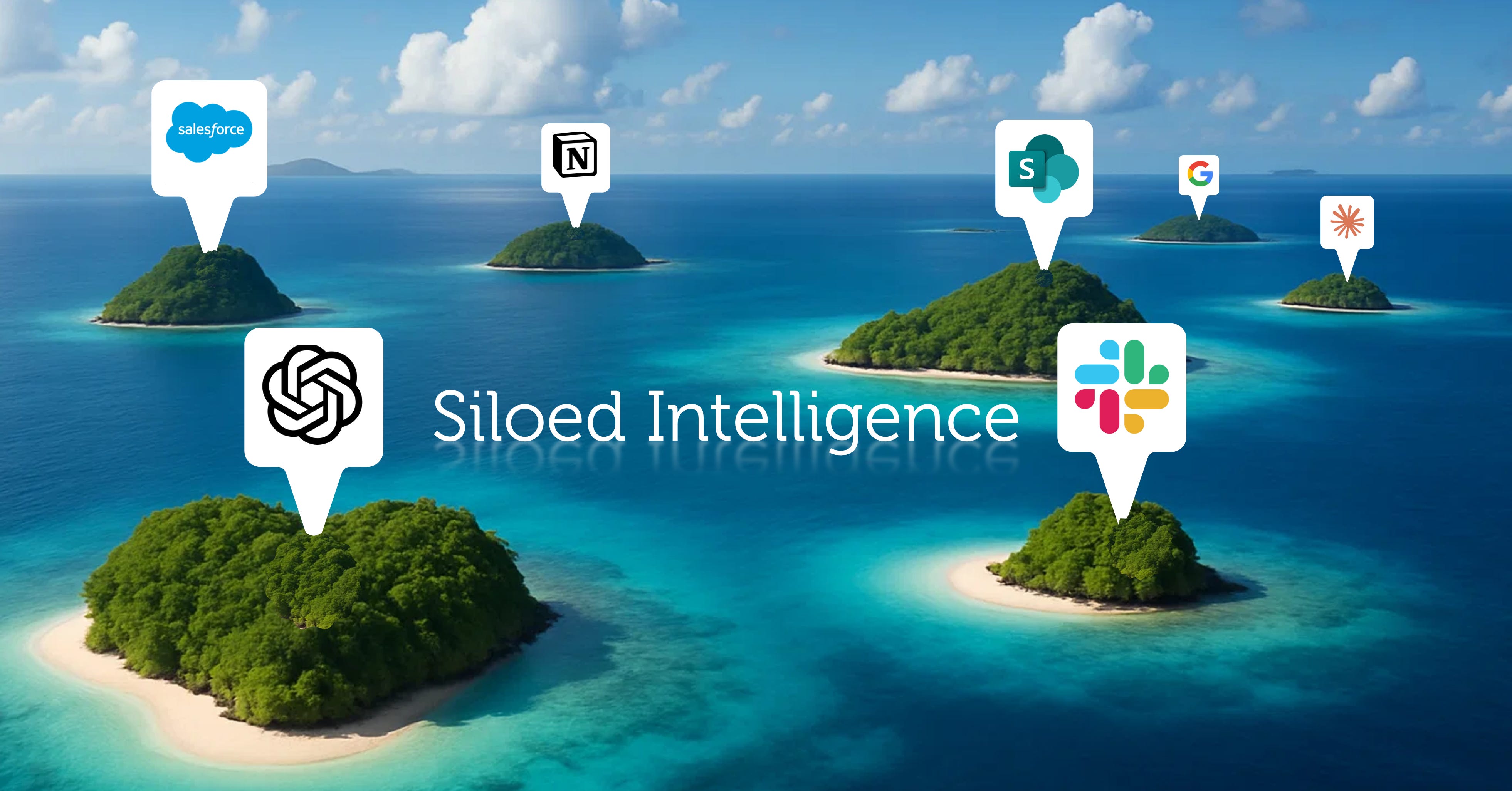
AI is exacerbating the siloing effect. It’s creating pockets of knowledge that’s locked away for individuals, or at best, departments. And the problem is actually getting worse! Compounding as employees continue to build their personal workflows on AI, and constantly experiment with new tools.
This is Siloed Intelligence. Islands of intelligence, information, and knowledge sharing that is AI-enabled and AI-powered — but locked away.
To be clear, I have no problem with experimentation or individuals employing AI to improve their personal workflows! But the challenge of defining a unified source of truth, governance, strategic direction, etc. is bigger than that. Even if users can inter-connect their tools to share data and information — organizations still need systems to align people, process, and platforms.
Implementing AI for Organizations
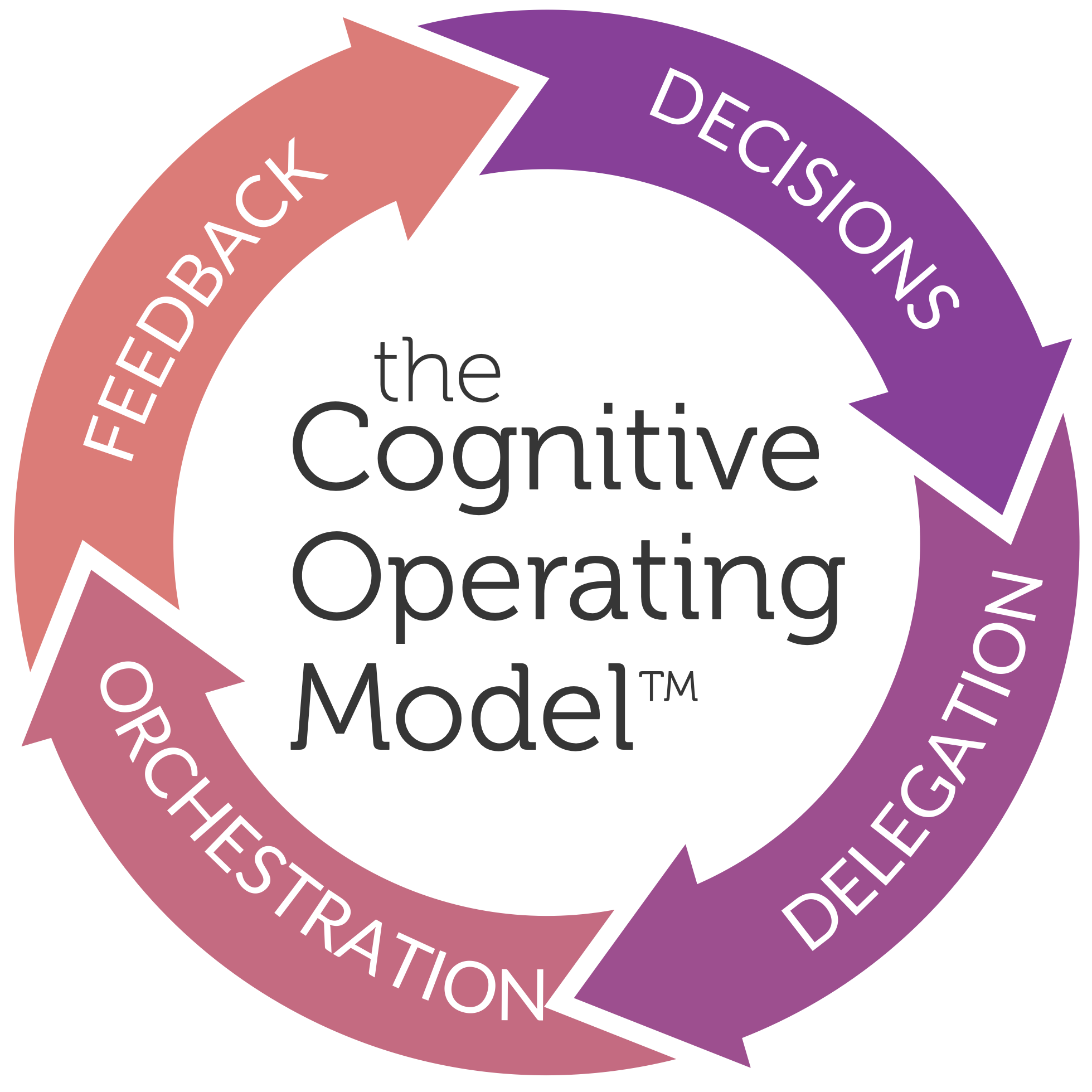
The Cognitive Operating Model (COM) is a strategic framework for rethinking how organizations leverage AI — not as a hodgepodge of bolt-on tools for existing workflows, but as a foundational shift in how we work, and how work gets done.
Most companies today are approaching AI the way they approached cloud computing and automation: integrating it into existing workflows to speed up individual tasks. That’s a start — and it’s certainly a transformation — but it’s not transformational.

The Cognitive Operating Model reframes AI as a new layer of intelligence that sits at the heart of decision-making, coordination, and execution. It’s about breaking down your existing systems, and re-engineering how you operate, to fully take advantage of what AI makes possible — real-time orchestration, decentralized intelligence, and adaptive systems.
The COM model helps leaders ask the right questions:
Where do humans add the most value?
What decisions can be delegated—and how?
How do we build systems that learn and adapt as conditions change?
What’s the role of trust, governance, and transparency in all of this?
It’s not just about AI readiness. It’s about AI maturity—and building a business that thinks and acts cognitively.
Explore the Cognitive Operating Model
This series provides a critical overview that connects a growing body of thought leadership in a structured approach. Start with these foundational essays (more are being added weekly!):
Stop Integrating AI. Start Operating on it.
This is a primer on the Cognitive Operating Model approach. Read this to discover why most AI strategies fall short —and what it means to build with cognition at the core.You’re Not Ready to Automate with AI Until You’ve Mapped Your Decisions
AI’s real strategic advantage isn’t efficiency — but orchestration! Read this to learn how to see the possibilities beyond automation.From Decisions to Delegation: Designing Your AI-Ready Operating Model
The Four Tiers of AI Delegation is a practical framework to help organizations map decisions across human and machine to optimize responsibility.From Delegation to Orchestration: Connecting the Pieces
This is where planning turns into execution — integrating AI into your workflows as an enhancement to support, improve, and optimize output and efficiency.From Orchestration to Evolution: Building Feedback Loops
Feedback loops provide the insight and intelligence to transform your implementation of AI as a system, into an operationalized platform for growth.
📥 Tools & Resources
Ready to start exploring how COM can help your organization adopt AI? Start your journey here with our Be AI Ready: Cognitive Operating Model™ worksheet:
We're continuing to develop assessments, templates, and strategic guides to help teams apply the Cognitive Operating Model in real scenarios. Check back soon or subscribe to get updates as they’re released!